
Your Professional Solenoid Valve Supplier
XINXIANG KAIRUI REFRIGERATION EQUIPMENT CO., LTD,is a professional manufacturing company integrating scientific research, design,production sales and service that serve the global. Our factory mainly produce all kinds of refrigeration filter and can be used for Carrier YORK, TRANE McQuay Bitzer Refcomp brand refrigeration units such as the supporting filter spot sales (part). We also sell chiller spare parts for these brands.
Professional Team
Our team of proficient experts is dedicated to building long-term partnerships with clients by delivering impeccable and reliable services.
Custom Service
We provide tailored solutions for the customization of various filter types to meet specific customer requirements.
Reasonable Price
We are committed to offering superior service and high-quality products at competitive and cost-effective prices.
Advanced Equipment
We have adopted world-leading technology and equipment from Europe and the United States, and have implemented robust quality control procedures and advanced production lines.
-
![Carrier Solenoid Valve]() Carrier Solenoid ValveThe arrier Solenoid Valve XM12FB008 is widely used in various refrigeration and air conditioning systems, especially where precise control of refrigerant flow is required. For example, in a chiller,
Carrier Solenoid ValveThe arrier Solenoid Valve XM12FB008 is widely used in various refrigeration and air conditioning systems, especially where precise control of refrigerant flow is required. For example, in a chiller, -
![York Solenoid Valve]() York Solenoid ValveThe York Solenoid Valve 025 41565 000, that is, the York solenoid valve 025-41565-000, is usually classified as an electronic expansion valve, which is a key component in the central air conditioning
York Solenoid ValveThe York Solenoid Valve 025 41565 000, that is, the York solenoid valve 025-41565-000, is usually classified as an electronic expansion valve, which is a key component in the central air conditioning -
![Trane Solenoid Valve]() Trane Solenoid ValveTrane solenoid valve VAL12003 is a new electronic expansion valve used in Trane air conditioning screw unit. It uses the principle of electromagnetic force to control the switch of fluid medium. It
Trane Solenoid ValveTrane solenoid valve VAL12003 is a new electronic expansion valve used in Trane air conditioning screw unit. It uses the principle of electromagnetic force to control the switch of fluid medium. It


Specification
|
Applicable refrigerant |
HCFC/HFC |
|
Applicable medium temperature |
-40°C~+105°C |
|
Minimum valve opening pressure difference |
Diaphragm type: 0.03MPa |
|
Maximum valve opening pressure difference |
2.5MPa |
|
Maximum working pressure |
3.2MPa |
|
Environmental temperature |
-30°C~+60°C |
|
Relative humidity |
Below 90% |
Advantages of Solenoid Valve
Fast response time
Solenoid valves can open and close extremely quickly, often within milliseconds. This makes them ideal for applications where rapid and precise control is required.
Remote operation and automation
Solenoid valves can be easily controlled remotely using electrical signals. This allows for automation and integration into complex control systems, and enables operation in hazardous or inaccessible locations.
Low power consumption
Solenoid valves are energy-efficient, consuming a relatively low amount of power.
Compact size and lightweight
Compared to other types of valves, solenoid valves are generally compact and lightweight. This saves space and makes for easy installation.
Reliability and durability
They have few moving parts which reduces the risk of wear and tear. With proper maintenance, solenoid valves can provide reliable and long-lasting performance.
Cost-effectiveness
Solenoid valves are generally cost-effective compared to other types of valves, especially for simple on/off control applications.
Easy integration
They can be easily integrated into existing systems and are compatible with various control signals, including digital and analog inputs.
Safety
Solenoid valves are available in normally closed or normally open configurations, providing fail-safe options as they will revert to a safe state in the event of power loss.
Precision and accuracy
Solenoid valves can provide consistent performance in critical applications with precise and accurate control of fluid and gas flow.

Manufacturing: Used in pneumatic systems for actuating cylinders and controlling fluid flow in production lines.
HVAC: Control refrigerant flow in air conditioning systems and manage water flow in heating systems.
Medical devices: Precise control of gasses and fluids in medical equipment like ventilators and anesthesia machines.
Automotive: Manage fuel injection, transmission fluid control, and various other vehicle systems.
Food and beverage: Control water and ingredient flow in processing and packaging equipment.
Chemical processing: Regulate the flow of various chemicals in production processes.
Automation: Used extensively in automated assembly lines, packaging machines, and robotic systems.
1. The main part of the valve (the valve body) is usually made of either brass, stainless steel, or plastic/PVC. Brass is commonly used for general-purpose applications due to its durability and cost-effectiveness, while stainless steel is preferred for corrosive environments or high-temperature applications. Plastic/PVC is often used in systems that require lightweight, corrosion-resistant components.
2. The seals and diaphragms are usually NBR (Nitrile Butadiene Rubber), EPDM (Ethylene propylene-diene monomer), Viton (FKM), or PTFE (Teflon).
3. Stainless steel is commonly used for plungers, springs, and other internal parts.
4. The solenoid coil is made of copper wire. Aluminum is sometimes used as an alternative to copper, but this is not common.
5. The wetted materials (those that come into contact with the media flowing through) are the valve body, seals, and plunger. These materials must be carefully selected to make sure that they are compatible with the media in the system.

Solenoid Valve Installation Steps
Strategic Planning and Preparation
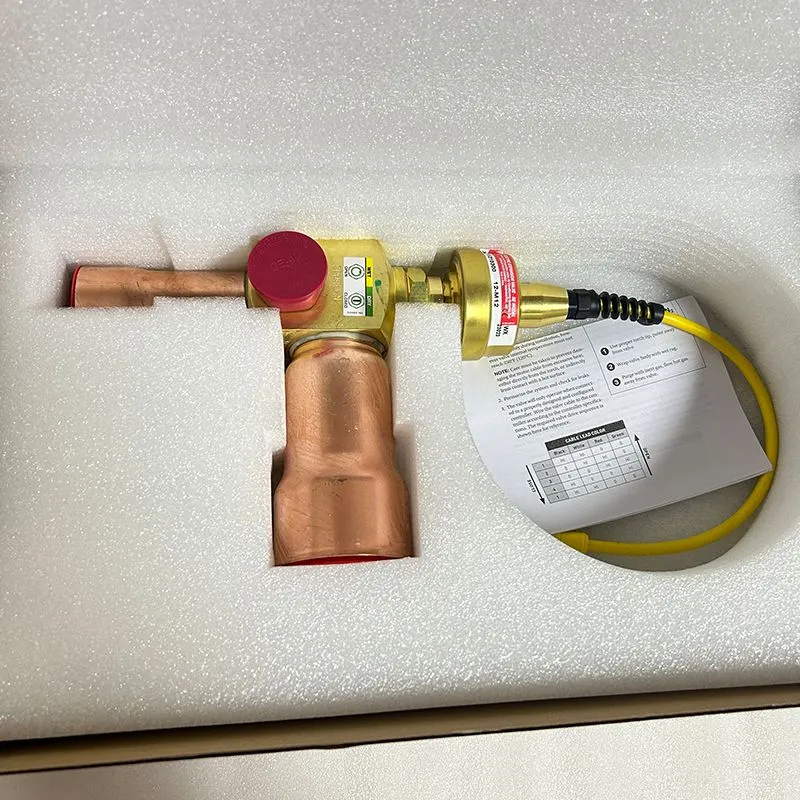
Before commencing the installation process, meticulously plan the location of the solenoid valve, taking into account factors such as accessibility, flow direction, pressure requirements, and electrical connections.

Pipe Preparation and Alignment
Thoroughly clean the pipes to remove any debris or contaminants that could compromise the integrity of the system. Utilize a pipe cutter to achieve clean, straight cuts and deburr the edges to prevent damage to the valve or fittings.
Expert Installation Technique
Apply high-quality pipe tape to the threaded ends of the pipe fittings to create a secure and leak-free seal. Carefully attach the fittings to the solenoid valve, using calibrated torque to tighten them effectively.

Electrical Wiring and Connection
If the solenoid valve requires electrical connections, adhere to the manufacturer's wiring diagrams and guidelines for a safe and efficient installation process. Connect the designated wires to a suitable power source, ensuring proper insulation and protection against electrical hazards.
Methodical Testing and Validation
Upon completion of the installation, systematically test the solenoid valve by activating the power source and monitoring its operation. Conduct a thorough inspection for leaks, malfunctions, or irregularities in performance.


Ongoing Maintenance and Optimization
Establish a routine maintenance schedule to uphold the peak performance of the solenoid valve. Regularly inspect the system for leaks, cleanliness, and component integrity.
Ordering Process

Packaging and Shipping
|
Packaging |
Wooden cases and cartons and so on |
|
Shipping |
UPS, DHL, FeDex, Sea and air freight, etc |
Our Factory


FAQ
As one of the leading solenoid valve manufacturers and suppliers in China, we warmly welcome you to buy high quality solenoid valve for sale here from our factory. Good service and competitive price are available.
valve, valve for soldering, valve for technologyPopular Products


