


Hey there! As a supplier of expansion valves, I often get asked about the minimum pressure these little wonders can handle. So, let's dive right into it and break down this technical topic in a way that's easy to understand.
First off, what's an expansion valve? Well, it's a crucial component in refrigeration and air - conditioning systems. Its main job is to control the flow of refrigerant into the evaporator. By doing so, it helps maintain the right temperature and pressure levels in the system, ensuring optimal performance.
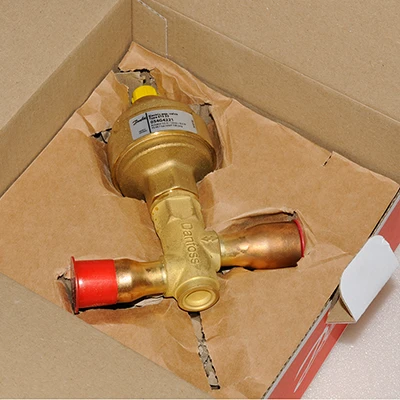

Now, the minimum pressure an expansion valve can handle varies depending on a bunch of factors. One of the biggest factors is the type of expansion valve. There are mainly two types: thermostatic expansion valves (TXV) and automatic expansion valves (AXV).
Thermostatic expansion valves are pretty smart. They use a sensing bulb to measure the temperature of the refrigerant leaving the evaporator. Based on this temperature, they adjust the flow of refrigerant. The minimum pressure for a TXV can typically range from around 2 to 5 psi (pounds per square inch). This low - pressure limit is set to ensure that the valve can still function properly and regulate the refrigerant flow accurately.
On the other hand, automatic expansion valves work a bit differently. They maintain a constant pressure in the evaporator. The minimum pressure for an AXV can be slightly lower than that of a TXV, sometimes going as low as 1 psi. This is because their operation is more focused on pressure control rather than temperature - based adjustment like TXV.
But it's not just about the type of valve. The design and construction of the expansion valve also play a huge role. For example, valves with larger orifices might be able to handle lower pressures because they allow for a greater volume of refrigerant to pass through at a given pressure.
The refrigerant used in the system is another key factor. Different refrigerants have different properties, such as density and vapor pressure. For instance, R - 134a, a commonly used refrigerant, has different pressure - temperature characteristics compared to R - 410A. So, the minimum pressure an expansion valve can handle will also depend on which refrigerant is being used in the system.
Let's talk about some real - world applications. In small domestic refrigerators, the expansion valves need to handle relatively low pressures. The minimum pressure here might be around 2 - 3 psi. These valves are designed to be efficient in a small - scale system where the cooling requirements are not as high as in industrial applications.
In larger commercial air - conditioning systems, the situation is a bit different. These systems often use more powerful expansion valves that can handle a wider range of pressures. However, even in these systems, the minimum pressure can't go too low. If the pressure drops below the valve's minimum operating limit, it can lead to issues like improper refrigerant flow, reduced cooling efficiency, and even damage to the valve itself.
Now, if you're in the market for expansion valves, we've got some great options. Check out our York Expansion Valve. It's a high - quality valve that's designed to handle a wide range of pressures, including the minimum pressures we've been talking about. Another great choice is the Carrier Expansion Valve 034G4221. This valve is known for its reliability and precision in controlling refrigerant flow. And for those looking for a more cost - effective option, our Fenshen Expansion Valve is a great pick. It offers good performance at an affordable price.
When choosing an expansion valve, it's important to consider the minimum pressure requirements of your specific system. Make sure to consult with a professional if you're not sure. We're here to help you make the right choice. Whether you're a DIY enthusiast working on a small refrigeration project or a professional in the HVAC industry, we've got the right expansion valve for you.
If you're interested in purchasing expansion valves or want to learn more about our products, don't hesitate to reach out. We're always happy to have a chat about your needs and find the best solution for your system.
In conclusion, the minimum pressure an expansion valve can handle depends on multiple factors such as the type of valve, its design, the refrigerant used, and the application. By understanding these factors, you can make an informed decision when it comes to selecting the right expansion valve for your refrigeration or air - conditioning system.
References
- ASHRAE Handbook of Refrigeration
- HVAC Systems Design and Installation Manual


