


Hey there! I'm a supplier of control boards, and I've seen all sorts of them over the years. In this blog, I'm gonna talk about the differences between different control boards.
First off, let's understand what a control board is. Simply put, a control board is like the brain of a device. It's a printed circuit board (PCB) that has electronic components on it, and it controls the functions of a machine or a system. Whether it's in your home appliances, industrial equipment, or even in your car, control boards play a crucial role.
Different Types of Control Boards Based on Applications
Home Appliance Control Boards
These are the ones you'll find in your everyday household stuff. For example, in your washing machine, the control board manages the different cycles, the water level, and the spin speed. In a refrigerator, it controls the temperature, the defrost cycle, and sometimes even the ice maker.
One of the key features of home appliance control boards is their reliability. They need to work day in and day out without much hassle. They're also designed to be user - friendly. You can easily set the settings on your microwave or dishwasher through the control panel, which is connected to the control board.
Let's take a look at some well - known brands' control boards. The Carrier Control Board is often used in Carrier's HVAC systems. It's responsible for regulating the temperature, the fan speed, and the airflow. It's built to be energy - efficient, which helps you save on your electricity bills.
Industrial Control Boards
Industrial control boards are a whole different ballgame. They're used in factories, manufacturing plants, and other industrial settings. These control boards need to handle a lot more complex tasks and a higher volume of data.
For instance, in a robotic assembly line, the control board coordinates the movements of the robots, the speed of the conveyor belts, and the quality control sensors. They need to be extremely precise and durable because any malfunction can lead to costly production delays.
Industrial control boards often have advanced communication capabilities. They can be connected to other systems through Ethernet, Wi - Fi, or other industrial protocols. This allows for remote monitoring and control, which is really handy for large - scale operations.
Automotive Control Boards
Your car is full of control boards. The engine control unit (ECU) is one of the most important ones. It manages the fuel injection, the ignition timing, and the emissions control. It constantly monitors the engine's performance and makes adjustments to ensure optimal efficiency and power.
There are also control boards for the transmission, the brakes, and the airbags. These control boards need to be highly reliable because they're directly related to your safety on the road. They're designed to withstand harsh conditions, like extreme temperatures and vibrations.
Differences in Design and Components
Component Quality
The quality of components used in control boards can vary a lot. Home appliance control boards usually use standard - grade components. These are cost - effective and work well for the relatively simple tasks they perform.
On the other hand, industrial and automotive control boards use high - quality, often military - grade components. These components can handle high temperatures, high voltages, and a lot of stress. They're also more resistant to electromagnetic interference (EMI), which is crucial in industrial and automotive environments.
Circuit Complexity
The complexity of the circuits on control boards also differs. Home appliance control boards typically have relatively simple circuits. They have a few microcontrollers, some sensors, and basic input - output interfaces.
Industrial control boards, however, have much more complex circuits. They may have multiple microprocessors, high - speed data buses, and advanced memory systems. This complexity allows them to handle the large amount of data and complex algorithms required for industrial operations.
Automotive control boards are also quite complex, especially the ones in modern cars with advanced features like autonomous driving. They need to process data from multiple sensors, such as cameras, radar, and lidar, in real - time.
Differences in Functionality
Programmability
Home appliance control boards usually have limited programmability. You can set some basic functions like the cooking time on a microwave or the wash cycle on a washing machine. But the programming is mostly pre - set by the manufacturer.
Industrial control boards are highly programmable. Engineers can write custom software to control the specific processes in a factory. They can adjust the parameters, add new functions, and integrate with other systems as needed.
Automotive control boards also have a certain level of programmability. For example, mechanics can use diagnostic tools to reprogram the ECU to improve the engine's performance or to fix some minor issues.
Safety Features
Safety is a big deal when it comes to control boards. Home appliance control boards have basic safety features like over - temperature protection and short - circuit protection. These features prevent the appliance from overheating or getting damaged.
Industrial control boards have more advanced safety features. They may have emergency stop buttons, fail - safe mechanisms, and redundant systems. In case of a malfunction, these features can prevent accidents and protect the workers and the equipment.
Automotive control boards have some of the most sophisticated safety features. For example, the airbag control board constantly monitors the impact sensors and deploys the airbags at the right time to protect the passengers.
Examples of Specific Control Boards
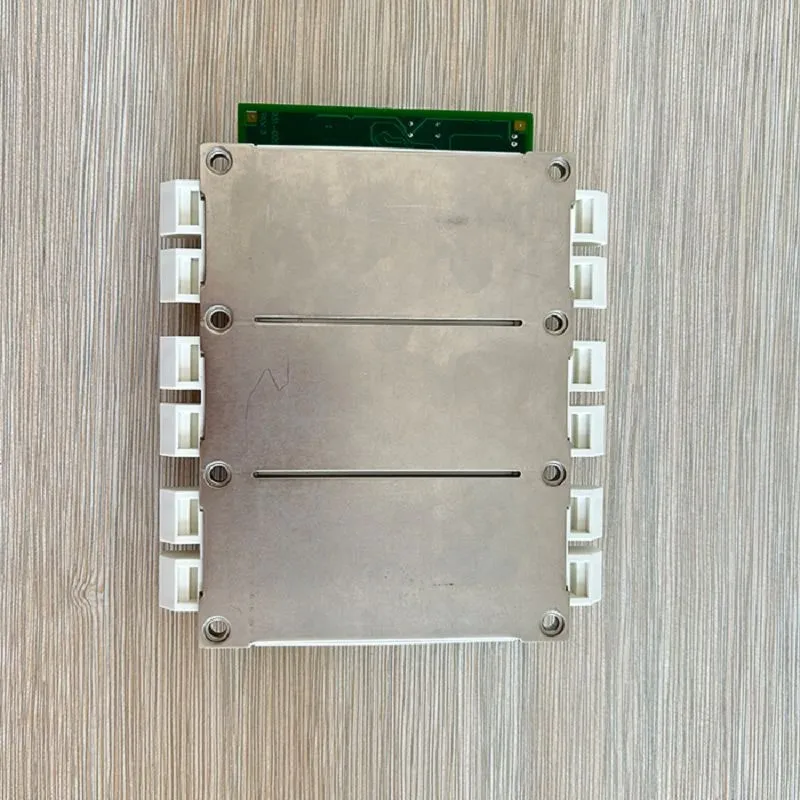
Let's take a closer look at a Carrier Main Control Board 32GB500182EE. This control board is used in Carrier's HVAC systems. It has a built - in microcontroller that manages the temperature, humidity, and fan speed. It also has a communication interface that allows it to be connected to a smart home system. You can control your HVAC system from your smartphone using this control board.
The York Control Board is another example. York is a well - known brand in the HVAC industry. Their control boards are designed to be energy - efficient and reliable. They use advanced sensors to accurately measure the temperature and humidity in a room, and then adjust the system accordingly.

Conclusion
So, as you can see, there are significant differences between different control boards. Whether it's the application, the design, the components, or the functionality, each type of control board is tailored to its specific needs.
If you're in the market for control boards, whether it's for your home appliances, industrial equipment, or automotive projects, I'm here to help. I've got a wide range of high - quality control boards that can meet your requirements. Don't hesitate to reach out if you have any questions or if you're interested in purchasing. Let's have a chat and find the perfect control board for you.
References
- "Control Systems Engineering" by Norman S. Nise
- "Automotive Electronics Handbook" by Ronald K. Jurgen
- Manufacturer's manuals for Carrier, York, and other control board brands


