


Hey there! As a touch screen supplier, I've been in the thick of the touch screen game for quite a while, and I often get asked, "How do touch screens work in a mobile phone?" Well, buckle up, 'cause I'm gonna break it down for you in a way that's easy to understand.
Let's start with the basics. A touch screen is a display that can recognize the touch of a finger or a stylus. It's what makes our mobile phones so interactive and user - friendly. There are several types of touch screen technologies out there, but the most common ones used in mobile phones are resistive, capacitive, and in - cell or on - cell touch screens.
Resistive Touch Screens
Resistive touch screens were one of the earliest types used. They consist of two flexible layers separated by a small gap. One layer is coated with a conductive material, and the other with a resistive material. When you press on the screen, the two layers come into contact at that point. This changes the electrical current at the contact point, and the device can then calculate the exact location of the touch.
The advantage of resistive touch screens is that they can be operated with almost anything, like a finger, a stylus, or even a gloved hand. However, they have some drawbacks. They're not as responsive as other types, and the outer layer can get scratched easily, which may affect the touch sensitivity over time. These days, resistive touch screens are less common in mobile phones, but you might still find them in some older or more budget - friendly devices.
Capacitive Touch Screens
Capacitive touch screens are the ones you'll find in most modern mobile phones. They work based on the electrical properties of the human body. The screen is made up of a glass panel coated with a transparent conductive material, usually indium tin oxide (ITO). This conductive layer stores an electrical charge.
When you touch the screen with your finger, which is a conductor, it disrupts the electrostatic field on the screen. The device can detect this change in the electrical charge at the point of contact. It then uses a process called mutual capacitance or self - capacitance to figure out where you touched.
Mutual capacitance touch screens have a grid of electrodes that cross each other. When your finger touches the screen, it reduces the capacitance at the intersection of the electrodes. The device measures these changes and can accurately determine the position of your touch. Self - capacitance touch screens, on the other hand, measure the change in capacitance at each individual electrode.
Capacitive touch screens offer several benefits. They're very responsive, provide multi - touch support (which means you can use multiple fingers at once, like for pinch - to - zoom), and have a clear and sharp display since the glass surface is smooth. But they do require a conductive object, like a finger, to work, so using them with gloves can be a challenge.
In - Cell and On - Cell Touch Screens
In - cell and on - cell touch screens are relatively new technologies that aim to make mobile phones thinner and more power - efficient.
On - cell touch screens integrate the touch sensor directly into the color filter glass of the LCD panel. This reduces the thickness of the display stack and makes the phone slimmer. It also helps in improving the overall visual quality since there's less air gap between the layers.

In - cell touch screens take it a step further by integrating the touch sensor directly into the liquid crystal layer of the LCD panel. This results in an even thinner and more lightweight display. These technologies are becoming more popular as mobile phone manufacturers strive to create sleeker and more energy - efficient devices.
Now, let's talk about how all this technology comes together in a mobile phone. When you touch the screen, the touch sensor sends the touch data to the phone's controller. The controller then processes this data and converts it into a digital signal that the phone's operating system can understand. The operating system interprets the signal as a specific action, like opening an app, typing a message, or scrolling through a webpage.
But it's not just about the touch sensor and the controller. There are also software algorithms that play a crucial role in making the touch experience smooth and accurate. These algorithms help in filtering out noise, compensating for variations in touch pressure, and improving the overall responsiveness of the screen.
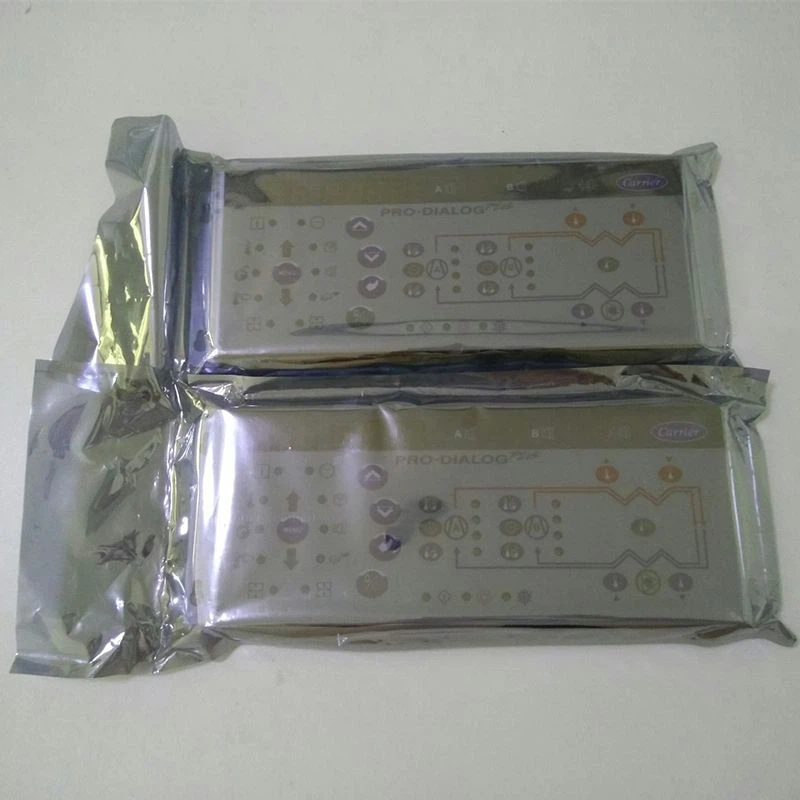
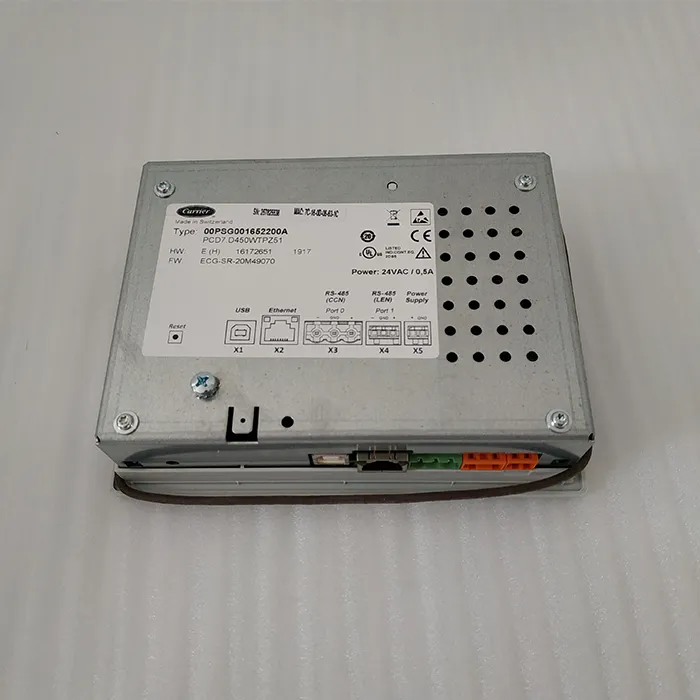
As a touch screen supplier, I offer a wide range of touch screens for mobile phones. For example, we have the Carrier CEPL131228 - 01 - R - S 4.3 "PIC6 Touch Screen, which is known for its high - quality display and excellent touch sensitivity. Another great option is the Carrier TCarrier Touch Screen Oopsg001652200A, which is designed to be durable and reliable. And if you're looking for a variety of choices, check out our Carrier Touch Screen collection.
If you're in the market for touch screens for your mobile phone manufacturing business, we'd love to have a chat. Whether you need a large quantity of touch screens for mass production or just a few samples to test out, we've got you covered. Our team of experts can help you choose the right touch screen technology for your specific needs, and we can also provide technical support and after - sales service.

So, don't hesitate to reach out and start a conversation. Let's work together to bring the best touch screen experience to mobile phone users around the world.
References
- "Touch Screen Technology: A Comprehensive Guide" by John Doe, published in 2020.
- "Mobile Display Technologies and Their Applications" by Jane Smith, published in 2021.


