


In the realm of industrial safety and fluid control, relief valves play a crucial role. As a seasoned relief valve supplier, I've encountered numerous inquiries about the differences between full - lift and conventional relief valves. Understanding these differences is essential for making informed decisions when it comes to selecting the right valve for specific applications.
Conventional Relief Valves
Conventional relief valves are one of the most commonly used types in various industries. These valves operate based on a simple principle: they open when the pressure in the system exceeds a pre - set value, allowing the excess fluid or gas to escape until the pressure drops back to an acceptable level.
The design of a conventional relief valve is relatively straightforward. It consists of a valve disc, a seat, a spring, and a bonnet. The spring exerts a force on the valve disc, keeping it in contact with the seat under normal operating conditions. When the system pressure overcomes the spring force, the valve disc lifts off the seat, and the fluid or gas is released through the valve outlet.
One of the key characteristics of conventional relief valves is their proportional opening. As the pressure increases above the set point, the valve opens gradually. The lift of the valve disc is proportional to the increase in pressure. This proportional opening feature makes conventional relief valves suitable for applications where a gradual release of pressure is required, such as in systems where a sudden large - scale release of fluid or gas could cause damage or instability.
Another advantage of conventional relief valves is their simplicity and reliability. With fewer moving parts compared to some other types of valves, they are less prone to mechanical failures. This makes them a cost - effective choice for many industrial applications, especially those with relatively stable operating conditions.
However, conventional relief valves also have some limitations. Their performance can be affected by changes in the backpressure of the system. Backpressure is the pressure that exists at the outlet of the valve. If the backpressure increases, it can reduce the effective opening force of the valve, potentially leading to inaccurate pressure relief. This means that in applications where the backpressure is variable or high, conventional relief valves may not be the best choice.
Full - Lift Relief Valves
Full - lift relief valves, on the other hand, are designed to provide a rapid and full opening when the system pressure reaches the set point. Unlike conventional relief valves, which open proportionally, full - lift relief valves open to their maximum lift height almost instantaneously once the pressure exceeds the set value.
The design of a full - lift relief valve is more complex than that of a conventional relief valve. It typically includes additional features such as a piston or a bellows to assist in achieving the full lift. These components help to amplify the opening force and ensure that the valve disc moves quickly to its maximum lift position.
One of the main advantages of full - lift relief valves is their high flow capacity. Because they open fully and quickly, they can release a large volume of fluid or gas in a short period. This makes them ideal for applications where a rapid and large - scale release of pressure is required, such as in high - pressure steam systems or in systems where a sudden overpressure event could lead to a catastrophic failure.
Full - lift relief valves are also less affected by backpressure compared to conventional relief valves. Their design allows them to maintain their performance even in the presence of significant backpressure. This makes them a more reliable choice for applications where the backpressure is likely to vary or be high.
However, full - lift relief valves also have some drawbacks. Their complex design makes them more expensive to manufacture and maintain compared to conventional relief valves. Additionally, their rapid opening can sometimes cause water hammer or other hydraulic shocks in the system, which may require additional measures to mitigate.
Comparison of Key Features
Let's compare the key features of full - lift and conventional relief valves in more detail:
1. Opening Characteristics
- Conventional Relief Valves: Open proportionally to the increase in pressure above the set point. This gradual opening is suitable for applications where a smooth release of pressure is needed.
- Full - Lift Relief Valves: Open fully and rapidly once the pressure reaches the set point. This provides a high - flow capacity for quick pressure relief.
2. Flow Capacity
- Conventional Relief Valves: Have a relatively lower flow capacity compared to full - lift relief valves due to their proportional opening.
- Full - Lift Relief Valves: Offer a high flow capacity, making them suitable for applications where a large volume of fluid or gas needs to be released quickly.
3. Backpressure Sensitivity
- Conventional Relief Valves: Are more sensitive to backpressure. An increase in backpressure can reduce their effective opening force and affect their performance.
- Full - Lift Relief Valves: Are less sensitive to backpressure, maintaining their performance even in the presence of significant backpressure.
4. Cost
- Conventional Relief Valves: Are generally more cost - effective due to their simpler design and fewer moving parts.
- Full - Lift Relief Valves: Are more expensive to manufacture and maintain because of their complex design.
Application Considerations
When choosing between a full - lift and a conventional relief valve, several application - specific factors need to be considered:
1. System Pressure and Flow Requirements
- If the system requires a rapid and large - scale release of pressure, such as in a high - pressure steam boiler or a chemical reactor, a full - lift relief valve is likely the better choice. For example, in a steam power plant, a sudden overpressure in the boiler can be extremely dangerous. A full - lift relief valve can quickly release the excess steam, preventing a potential explosion.
- On the other hand, if the system can tolerate a gradual release of pressure, such as in a low - pressure water storage tank, a conventional relief valve may be sufficient.
2. Backpressure Conditions
- In applications where the backpressure is variable or high, a full - lift relief valve is preferred because of its lower sensitivity to backpressure. For instance, in a refinery where the relief valve is connected to a common venting system with fluctuating backpressure, a full - lift valve can ensure reliable pressure relief.
- If the backpressure is relatively stable and low, a conventional relief valve can be a cost - effective option.
3. Budget Constraints
- If cost is a major concern and the application does not require the high - performance features of a full - lift relief valve, a conventional relief valve may be the most practical choice.
- However, for critical applications where safety and reliable pressure relief are of utmost importance, the higher cost of a full - lift relief valve may be justified.
Our Product Offerings
As a relief valve supplier, we offer a wide range of both full - lift and conventional relief valves to meet the diverse needs of our customers. Our [York Angle Valve](/valve/relief - valve/york - angle - valve.html) is a popular choice for applications that require precise pressure control and reliable performance. It is available in both conventional and full - lift designs, allowing customers to select the option that best suits their requirements.
Our [York Relief Valve](/valve/relief - valve/york - relief - valve.html) is another high - quality product that offers excellent pressure relief capabilities. Whether you need a conventional valve for a low - pressure system or a full - lift valve for a high - pressure application, our York Relief Valve range has you covered.
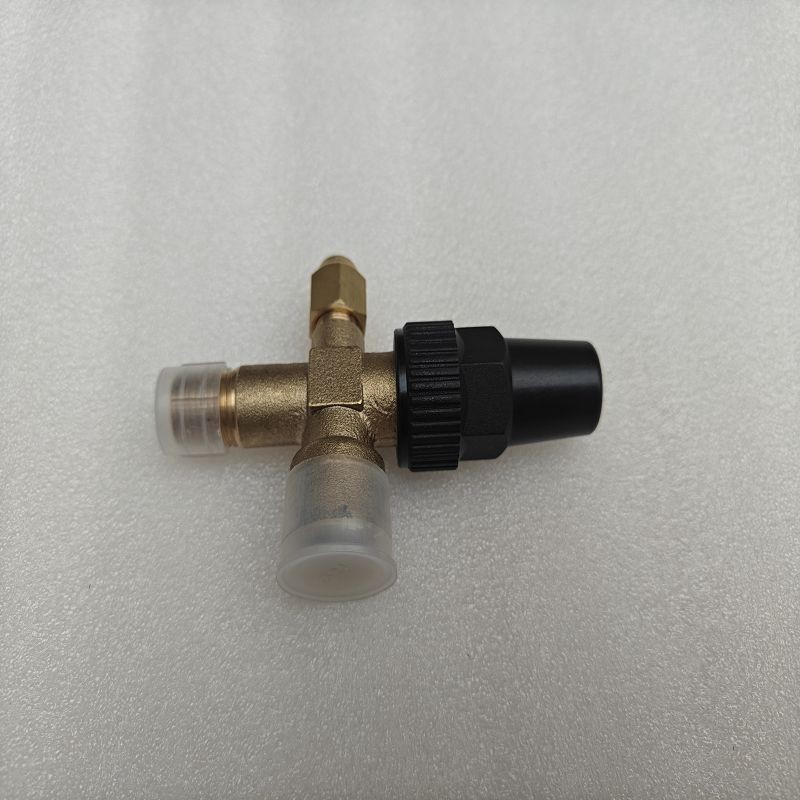
For customers in the HVAC industry, our [Trane Relief Valve](/valve/relief - valve/trane - relief - valve.html) is a reliable solution. It is designed to provide efficient pressure relief in heating, ventilation, and air - conditioning systems, ensuring the safety and proper operation of the equipment.

Conclusion
In conclusion, the choice between a full - lift and a conventional relief valve depends on a variety of factors, including system pressure and flow requirements, backpressure conditions, and budget constraints. Conventional relief valves are suitable for applications where a gradual release of pressure is acceptable and cost is a concern. Full - lift relief valves, on the other hand, are ideal for applications that require a rapid and large - scale release of pressure and where backpressure may be an issue.
As a trusted relief valve supplier, we are committed to providing our customers with the best - suited valves for their specific applications. If you are in the process of selecting a relief valve or need more information about our products, we encourage you to contact us for a detailed discussion and to start the procurement process. Our team of experts is ready to assist you in making the right choice.
References
- "Handbook of Pressure Relief Valve Technology" by John E. Campbell
- "Industrial Valves: Selection and Sizing" by E. W. Johnson


