


Hey there! As a supplier of expansion valves, I've had my fair share of experience dealing with both commercial and residential refrigeration systems. And let me tell you, there are some pretty significant differences between the expansion valves used in these two types of setups. In this blog, I'm gonna break down those differences for you, so you can get a better understanding of what's what.
Basics of Expansion Valves
First off, let's quickly go over what an expansion valve does. In a refrigeration system, the expansion valve is a crucial component. Its main job is to regulate the flow of refrigerant into the evaporator. By doing this, it controls the amount of refrigerant that turns from a high - pressure liquid to a low - pressure vapor, which is essential for the cooling process.
Capacity and Size
One of the most obvious differences between commercial and residential expansion valves is their capacity and size. Residential refrigeration systems, like your home fridge or a small window air conditioner, are designed to cool relatively small spaces. So, the expansion valves used in these systems are typically smaller and have a lower capacity. They don't need to handle large volumes of refrigerant because the cooling load is much less.
On the other hand, commercial refrigeration systems, such as those in supermarkets, restaurants, or large industrial freezers, have to cool much larger areas. These systems need to move a significant amount of refrigerant through the evaporator to maintain the desired temperature. As a result, commercial expansion valves are bigger and have a higher capacity. They're built to handle large - scale cooling demands. For example, a Carrier Expansion Valve 034G0508 used in commercial Carrier systems is designed to work with high - volume refrigerant flow, while a valve for a residential unit would be much more compact.
Precision and Control
Another key difference lies in the level of precision and control required. Residential refrigeration systems usually have a more stable cooling load. The temperature in your home fridge doesn't change drastically throughout the day, and the system doesn't need to make rapid adjustments. So, the expansion valves in residential units can be relatively simple in design and don't need to provide extremely precise control.
In contrast, commercial refrigeration systems often face fluctuating cooling loads. In a supermarket, for instance, the number of people entering and leaving, as well as the opening and closing of freezer doors, can cause significant changes in the cooling demand. Commercial expansion valves need to be highly precise to maintain a consistent temperature. They're equipped with advanced control mechanisms that can quickly respond to these changes. A Trane Expansion Valve used in a commercial Trane HVAC system is engineered to provide this high - level of precision control.
Durability and Reliability
Durability is also a major factor that sets commercial and residential expansion valves apart. Residential systems are generally used less intensively than commercial ones. Your home fridge might run 24/7, but it doesn't face the same kind of wear and tear as a commercial freezer in a busy restaurant.
Commercial expansion valves need to be built to last. They're exposed to harsher operating conditions, including higher pressures, larger temperature variations, and more frequent cycling. These valves are made from more robust materials and are designed to withstand long - term, heavy - duty use. A York Expansion Valve 025 - 35133 - 000 used in commercial York refrigeration systems is constructed with durability in mind to ensure reliable performance over an extended period.
Cost
Cost is another aspect where the two types of expansion valves differ. Residential expansion valves are generally less expensive. Since they're smaller, simpler in design, and don't require the same level of precision and durability as commercial valves, the manufacturing costs are lower. This makes them more affordable for homeowners and small - scale users.
Commercial expansion valves, however, come with a higher price tag. The advanced technology, larger size, and better - quality materials used in their construction all contribute to the increased cost. But when you consider the importance of these valves in maintaining the proper operation of a large - scale commercial refrigeration system, the investment is often well - worth it.
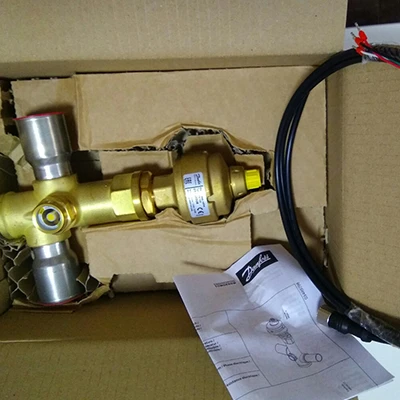

Maintenance and Service
Maintenance requirements also vary between commercial and residential expansion valves. Residential valves are usually easier to access and maintain. In a home fridge, for example, you can often reach the expansion valve without too much trouble. And since the operating conditions are less severe, they may not need to be serviced as frequently.
Commercial expansion valves, on the other hand, are often part of complex systems. Accessing them can be more difficult, and they may require more specialized tools and knowledge for maintenance. Regular maintenance is crucial for commercial valves to ensure their continued performance and to prevent costly breakdowns.
Compatibility with Refrigerants
The type of refrigerant used in a system can also influence the choice of expansion valve. While many residential and commercial systems use similar refrigerants, there are some differences. Newer residential systems are increasingly using more environmentally friendly refrigerants, and the expansion valves need to be compatible with these substances.
Commercial systems may use a wider range of refrigerants, depending on the specific application. Some industrial refrigeration systems, for example, use refrigerants with unique properties, and the expansion valves must be designed to work effectively with these specialized refrigerants.
Conclusion
So, as you can see, there are several key differences between expansion valves for commercial and residential refrigeration systems. From capacity and size to precision, durability, cost, maintenance, and refrigerant compatibility, each type of valve is tailored to meet the specific needs of its respective system.
Whether you're a homeowner looking to replace the expansion valve in your fridge or a business owner in need of a reliable valve for your commercial refrigeration system, I'm here to help. I've got a wide range of high - quality expansion valves suitable for both residential and commercial applications. If you're interested in learning more or making a purchase, don't hesitate to get in touch. Let's have a chat about your requirements and find the perfect expansion valve for your system.
References
ASHRAE Handbook of Refrigeration.
Manufacturer's technical documentation for Carrier, Trane, and York expansion valves.


