


Hey there! As a main board supplier, I've dealt with all sorts of motherboards, from those in your everyday desktops to the heavy - duty ones in servers. Today, I'm gonna break down the differences between server main boards and desktop main boards.

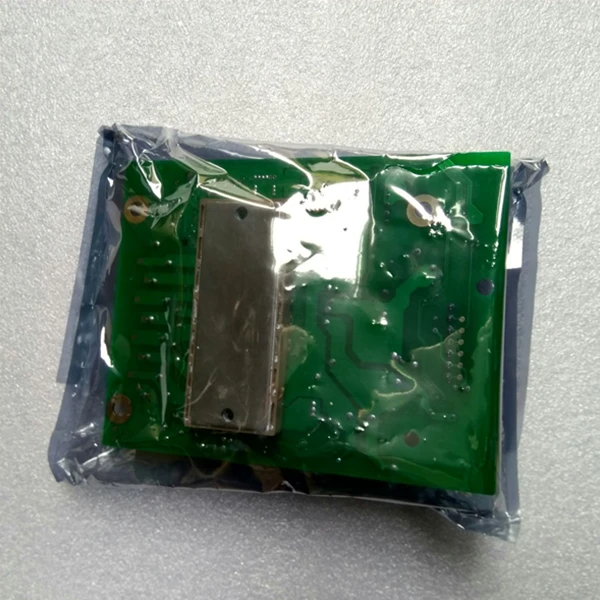
Form Factor and Physical Design
First off, let's talk about the physical aspects. Desktop main boards usually come in standard form factors like ATX, Micro - ATX, and Mini - ITX. These sizes are designed to fit neatly into regular desktop cases. For example, the ATX form factor is pretty common, measuring around 12 inches by 9.6 inches. It gives enough space for all the components you'd typically find in a desktop, like a graphics card, multiple RAM slots, and expansion cards.
On the other hand, server main boards have more diverse form factors. Some are similar in size to large desktop boards, but others are designed for rack - mount servers. Rack - mount servers are those big metal boxes that are stacked in data centers. Server boards often need to be more compact to fit into these racks efficiently. They also have to be built more sturdily because servers are usually running 24/7, and any physical damage could lead to a big problem.
Processor Support
When it comes to processors, desktop and server main boards are quite different. Desktop main boards are mainly built to support consumer - grade processors. These processors are great for everyday tasks like web browsing, gaming, and office work. They usually have a good balance between performance and power consumption. For example, an Intel Core i7 or AMD Ryzen 7 processor on a desktop board can handle most user needs just fine.
Server main boards, however, are designed for high - end processors. They often support multi - socket configurations, which means you can install more than one processor on the board. This is crucial for servers because they need to handle a large number of requests simultaneously. For instance, a server might be serving thousands of web pages, handling database queries, and running virtual machines all at once. Processors like Intel Xeon or AMD EPYC are commonly used on server main boards, and they offer features like higher core counts, better multi - threading capabilities, and more advanced security features.
Memory Support
Memory is another area where the differences are clear. Desktop main boards typically support a limited amount of RAM. Most consumer desktops have 8GB to 32GB of RAM, which is sufficient for normal usage. The memory modules used on desktop boards are usually DDR4 or the newer DDR5. They are relatively inexpensive and easy to find.
Server main boards, on the other hand, need to support a much larger amount of memory. Servers can have hundreds of gigabytes or even terabytes of RAM. They also support more advanced memory technologies like Error - Correcting Code (ECC) memory. ECC memory can detect and correct single - bit errors, which is extremely important in a server environment where data integrity is crucial. A small error in memory could lead to data corruption, which could be a disaster for a business.
Expansion Slots
Desktop main boards usually have a few expansion slots for things like graphics cards, sound cards, and Wi - Fi cards. These slots allow users to customize their desktops according to their needs. For example, a gamer might add a high - end graphics card to improve their gaming performance, while someone who needs to transfer large amounts of data quickly might add a Thunderbolt card.
Server main boards also have expansion slots, but they are often used for different purposes. They might have slots for network interface cards (NICs), which are used to connect the server to the network. Servers also need to support storage expansion, so they might have slots for RAID controllers or solid - state drives (SSDs). Some server boards even have slots for specialized cards like encryption cards or accelerator cards.
Reliability and Redundancy
Reliability is a key factor in the design of server main boards. Since servers are the backbone of many businesses, they need to be up and running all the time. Server main boards are built with redundant components to ensure that if one part fails, the server can still function. For example, they might have redundant power supplies, so if one power supply fails, the other can keep the server running. They also have redundant fans to keep the board cool, and redundant network connections to ensure continuous network access.
Desktop main boards, on the other hand, don't usually have these redundant features. They are designed for home or office use, where a short downtime is usually not a big deal. If a component fails on a desktop, you can usually just replace it and get back to work.
Cost
Cost is also a significant difference between server and desktop main boards. Desktop main boards are generally much cheaper. You can find a decent desktop main board for around $100 - $200. This makes them accessible to a wide range of consumers.
Server main boards, however, are much more expensive. The high - end components, advanced features, and better reliability come at a price. A server main board can cost anywhere from $500 to several thousand dollars, depending on its specifications and capabilities.
Use Cases
The use cases for desktop and server main boards are very different. Desktop main boards are used in personal computers for home and office use. They are designed to provide a good user experience for tasks like watching videos, playing games, and working on documents.
Server main boards are used in data centers, businesses, and other organizations that need to handle large amounts of data and traffic. They are used for tasks like hosting websites, running databases, and providing cloud services.
Some of Our Products
If you're in the market for a main board, we have a great selection. We offer products like the York Inverter Board 024 - 36133 - 002, which is a high - quality board for specific applications. We also have the Carrier Main Board and the York Main Board, both of which are reliable options for different needs.
Conclusion
In conclusion, server main boards and desktop main boards have many differences in terms of form factor, processor support, memory support, expansion slots, reliability, cost, and use cases. Whether you're building a home computer or a large - scale data center, it's important to choose the right main board for your needs. If you're interested in purchasing main boards or have any questions about our products, feel free to reach out to us for a procurement discussion. We're here to help you find the best solution for your requirements.
References
- Computer Hardware: A Beginner's Guide
- Server Technology Handbook


