


Hey there! As a control board supplier, I often get asked about the differences between a control board and a sensor module. So, I thought I'd take a few minutes to break it down for you.

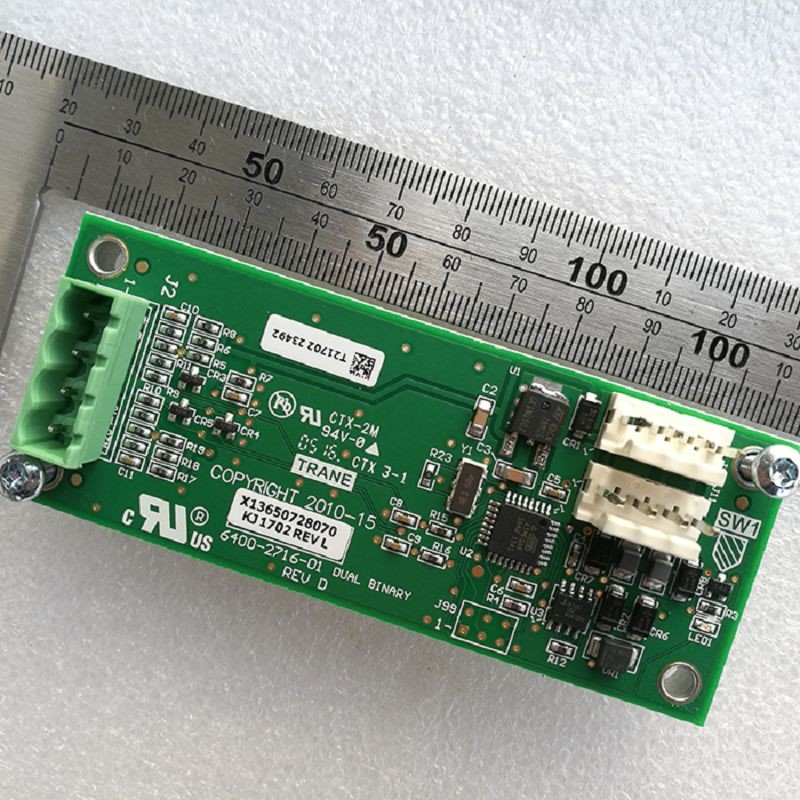
First off, let's talk about what a control board is. A control board is like the brain of a system. It's a printed circuit board (PCB) that contains electronic components and circuits designed to control and manage the operation of a device or a system. Think of it as the command center that tells other parts of the system what to do and when to do it.
Control boards come in all shapes and sizes, depending on their intended use. For example, you might have a simple control board in a small household appliance, like a toaster or a coffee maker. These boards are usually pretty basic and only need to control a few functions, like turning the appliance on and off, setting the temperature, or adjusting the cooking time.
On the other hand, you might have a more complex control board in an industrial machine or a high - tech device. These boards can be much larger and more sophisticated, with hundreds or even thousands of components. They're capable of controlling multiple functions simultaneously, monitoring system performance, and communicating with other devices or systems.
Some well - known control boards in the market include the York 031 - 01620 - 000 SRAM Power Board, the Trane Control Board, and the York 031 - 02060 - 001 SCR TRIGGER BOARD 60 HZ. These boards are used in various applications, from HVAC systems to industrial automation.
Now, let's move on to sensor modules. A sensor module is a device that detects and measures a physical quantity, like temperature, pressure, humidity, light, or motion. It then converts this physical quantity into an electrical signal that can be processed by a control board or other electronic devices.
Sensor modules are like the eyes and ears of a system. They provide the control board with the information it needs to make decisions and control the operation of the system. For example, in a home thermostat, a temperature sensor module measures the temperature in the room and sends this information to the control board. The control board then decides whether to turn on the heater or the air conditioner based on the set temperature.
Sensor modules can be very simple or quite complex. A simple sensor module might just consist of a single sensor and a basic circuit to convert the sensor's output into an electrical signal. A more complex sensor module might include multiple sensors, signal conditioning circuits, and even microcontrollers to process the sensor data before sending it to the control board.
One of the key differences between a control board and a sensor module is their function. The control board is all about control and management. It takes the input from the sensor modules and other sources, processes it, and then sends out control signals to other parts of the system. In contrast, the sensor module is focused on data collection. Its main job is to detect and measure physical quantities and provide accurate data to the control board.
Another difference is their design and construction. Control boards are typically more complex in terms of their circuitry and component layout. They need to handle multiple inputs and outputs, perform various calculations and logic operations, and communicate with different devices. Sensor modules, on the other hand, are usually designed to be as compact and efficient as possible, with a focus on accurate sensing and reliable signal conversion.
In terms of cost, control boards can be more expensive than sensor modules, especially for complex applications. This is because they often require more advanced components and more sophisticated manufacturing processes. However, the cost also depends on the specific requirements of the application. For some simple applications, a basic control board might be relatively inexpensive, while a high - precision sensor module could be quite costly.
When it comes to maintenance and troubleshooting, control boards and sensor modules also have different requirements. Control boards can be more difficult to troubleshoot because of their complexity. A problem with a control board could be caused by a faulty component, a software bug, or an issue with the wiring. Sensor modules, on the other hand, are usually easier to diagnose. If a sensor module is not working properly, it's often because the sensor itself is damaged or the calibration is off.
So, in summary, control boards and sensor modules are two essential components in many electronic systems, but they have distinct roles and characteristics. The control board is the control center that manages the system, while the sensor module is the data - gathering device that provides the information needed for control.
If you're in the market for a control board or have any questions about how they work with sensor modules, don't hesitate to reach out. We're here to help you find the right control board for your specific needs. Whether you're working on a small DIY project or a large - scale industrial application, we've got the expertise and the products to support you. Let's start a conversation about your requirements and see how we can assist you in your procurement process.
References
- Electronics textbooks on control systems and sensor technology
- Industry - specific manuals for control boards and sensor modules


