


In the dynamic field of robotics, control boards play a pivotal role, acting as the brain that orchestrates the complex movements and functions of robotic systems. As a control board supplier, I have witnessed firsthand the numerous challenges that come with integrating these essential components into robotics. In this blog, I will delve into the key challenges faced when using control boards in robotics, exploring technical, operational, and cost - related aspects.
Technical Challenges
Compatibility and Integration
One of the most significant technical challenges is ensuring compatibility between the control board and other components of the robotic system. Robotics encompasses a wide range of sensors, actuators, and power sources, each with its own set of specifications and communication protocols. For instance, a high - precision robotic arm may require a control board that can handle the complex feedback from multiple position sensors and drive high - torque motors. If the control board is not compatible with these sensors and motors, it can lead to inaccurate movements, system failures, or even damage to the components.
Moreover, integrating the control board with the overall robotic architecture can be a daunting task. Different robotic platforms may use various programming languages and operating systems. Some industrial robots rely on proprietary software, while hobbyist robots often use open - source platforms like ROS (Robot Operating System). The control board must be able to interface seamlessly with these different software environments. For example, when using a Carrier HK50AA026 Board, engineers need to ensure that it can communicate effectively with the chosen software stack to achieve the desired robotic functionality.
Processing Power and Speed
Robotic applications often demand real - time processing capabilities. Whether it's a self - driving robot navigating through a dynamic environment or a pick - and - place robot in a factory, the control board needs to process sensor data, make decisions, and send commands to the actuators within milliseconds. However, many off - the - shelf control boards may not have sufficient processing power to handle these complex tasks.
As robotic systems become more sophisticated, with the addition of advanced features such as computer vision and machine learning algorithms, the demand for high - performance control boards increases. For example, a robot equipped with a camera for object recognition needs a control board that can quickly analyze the visual data, identify objects, and determine the appropriate course of action. Insufficient processing power can result in slow response times, which can be a critical issue in safety - critical applications.
Power Management
Power management is another crucial technical challenge. Robotic systems are often battery - powered, especially in mobile and portable applications. The control board must be designed to consume minimal power while still providing the necessary functionality. Inefficient power management can lead to short battery life, which is a major drawback for mobile robots.
On the other hand, some high - performance control boards may require a significant amount of power, which can pose challenges in terms of heat dissipation. Excessive heat can affect the performance and reliability of the control board, leading to component failures. For example, in a large industrial robot with multiple high - power motors and sensors, the control board needs to manage power distribution effectively to ensure stable operation and prevent overheating.
Operational Challenges
Programming and Configuration
Programming and configuring control boards for robotics can be a complex and time - consuming process. Unlike simple electronic devices, robots require sophisticated algorithms to perform tasks such as motion planning, sensor fusion, and decision - making. Engineers need to have a deep understanding of programming languages, control theory, and robotics concepts to develop effective control software.
Moreover, the configuration of the control board may vary depending on the specific robotic application. For example, a humanoid robot may require different control parameters compared to a robotic vacuum cleaner. Each time a new robotic system is developed or modified, the control board needs to be re - programmed and re - configured, which can be a significant challenge, especially for small - scale robotics projects with limited resources.
Maintenance and Troubleshooting
Once a robotic system is deployed, maintenance and troubleshooting of the control board become essential. Control boards are complex electronic devices that can experience various issues, such as hardware failures, software bugs, or communication errors. Identifying and fixing these problems can be difficult, especially in large - scale industrial robotic systems where downtime can result in significant financial losses.
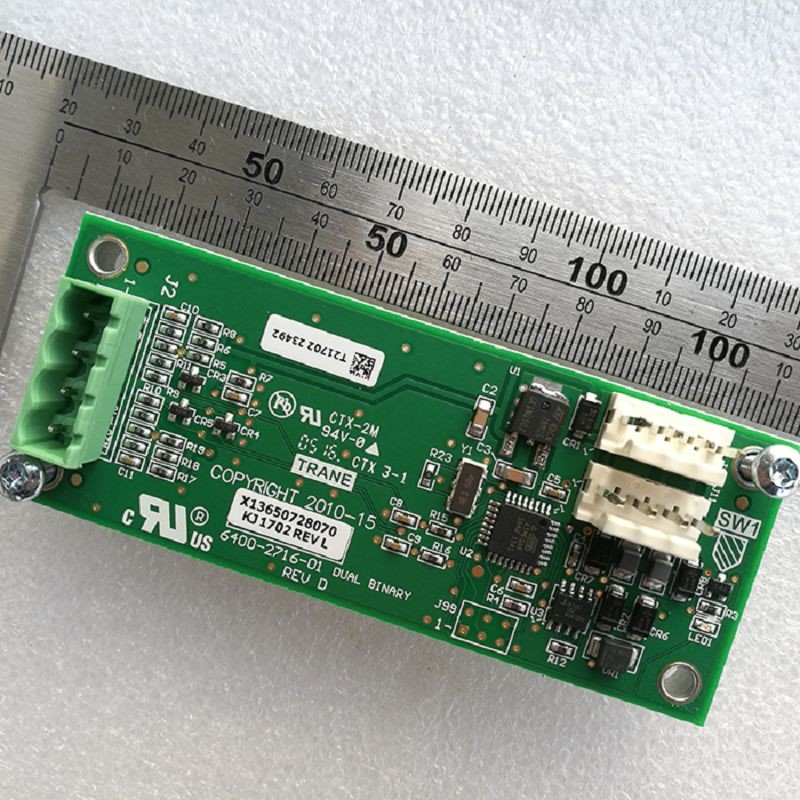
In addition, as technology evolves, control boards may become obsolete over time. This can lead to challenges in finding replacement parts and support for older control boards. For example, if a robotic system uses a Trane Control Board that is no longer in production, it may be difficult to source spare parts or get technical support.
Safety and Reliability
Safety is a top priority in robotics, especially in applications where robots interact with humans or operate in hazardous environments. The control board must be designed to ensure the safe operation of the robotic system. This includes implementing fail - safe mechanisms, such as emergency stop functions and redundant control systems.
Reliability is also crucial, as any malfunction of the control board can lead to system failures. Robotic systems are often used in critical applications, such as medical robotics and aerospace, where reliability is non - negotiable. The control board needs to be able to withstand harsh environmental conditions, such as temperature variations, humidity, and vibrations, without compromising its performance.
Cost - Related Challenges
Initial Investment
The cost of high - quality control boards can be a significant barrier for many robotics projects. Advanced control boards with high processing power, real - time capabilities, and advanced features often come with a high price tag. For small - scale robotics startups or hobbyist projects, the initial investment in a suitable control board can be prohibitive.

In addition to the cost of the control board itself, there are also additional costs associated with software development, training, and integration. For example, if a project requires the use of proprietary software for the control board, there may be licensing fees involved.
Total Cost of Ownership
The total cost of ownership (TCO) of a control board includes not only the initial purchase price but also the cost of maintenance, upgrades, and support over the lifespan of the robotic system. As mentioned earlier, maintenance and troubleshooting can be time - consuming and expensive, especially if spare parts are difficult to find or if technical support is limited.
Upgrading the control board to keep up with the latest technological advancements can also add to the TCO. For example, if a robotic system needs to be updated to incorporate new features or improve performance, the control board may need to be replaced or upgraded, which can be a costly process.
Conclusion
In conclusion, using control boards in robotics presents a multitude of challenges, ranging from technical issues such as compatibility and processing power to operational challenges like programming and safety, as well as cost - related concerns. However, despite these challenges, control boards are essential for the development and operation of advanced robotic systems.
As a control board supplier, we are committed to addressing these challenges by providing high - quality, reliable, and cost - effective control boards. Our York 331 - 02430 - 601 OPTIVIEW MICROBOARD and other products are designed to meet the diverse needs of the robotics industry.
If you are facing challenges in selecting the right control board for your robotic project or need assistance with integration, programming, or maintenance, we invite you to contact us for a procurement discussion. Our team of experts is ready to help you find the best solutions for your specific requirements.
References
- Siciliano, Bruno, and Oussama Khatib, eds. Springer Handbook of Robotics. Springer, 2016.
- Spong, Mark W., Seth Hutchinson, and M. Vidyasagar. Robot Modeling and Control. Wiley, 2006.
- Dudek, Gregory, and Michael Jenkin. Computational Principles of Mobile Robotics. Cambridge University Press, 2010.


