


Hey there! I'm a supplier of control boards, and today I wanna chat about how a control board communicates with other devices. It's a pretty cool topic that's super important in all sorts of industries.
First off, let's talk about what a control board actually is. A control board is like the brain of a system. It's a printed circuit board (PCB) that has a bunch of components on it, like microcontrollers, integrated circuits, and connectors. These components work together to manage and control the functions of other devices in a system.
There are several ways a control board can communicate with other devices, and I'll break them down for you.
Wired Communication
Serial Communication
Serial communication is one of the most common ways for a control board to talk to other devices. It sends data one bit at a time over a single wire or a pair of wires. There are different types of serial communication, like RS - 232, RS - 485, and USB.
RS - 232 is an old - school but still widely used standard. It's often used for short - distance communication between a control board and a computer or other peripherals. For example, if you have a control board in an industrial machine and you want to connect it to a PC for configuration or monitoring, RS - 232 can do the job.
RS - 485, on the other hand, is great for longer - distance communication and can support multiple devices on the same bus. It's commonly used in building automation systems, where a control board might need to communicate with sensors and actuators spread out across a large building.
USB (Universal Serial Bus) is a more modern and user - friendly option. It's used in a wide range of consumer electronics, from smartphones to printers. A control board can use USB to connect to a computer for easy data transfer and power supply. For instance, a Carrier HK50AA026 Board might use USB for firmware updates or to send diagnostic data to a technician's laptop.
Parallel Communication
Parallel communication sends multiple bits of data simultaneously over multiple wires. It's faster than serial communication but usually has a shorter range and is more expensive. It's often used in applications where high - speed data transfer is required, like in some computer motherboards where the control board needs to communicate quickly with the memory or other internal components.
Wireless Communication
Wi - Fi
Wi - Fi is a popular wireless communication method for control boards. It allows a control board to connect to a local area network (LAN) or the internet. This is really useful in smart home applications, where a control board in a thermostat or a security camera can connect to your home Wi - Fi network. You can then control these devices remotely using your smartphone or a web - based interface. For example, a York 331 - 02430 - 601 OPTIVIEW MICROBOARD in a smart HVAC system could use Wi - Fi to receive temperature settings from your phone.
Bluetooth
Bluetooth is another wireless option. It's mainly used for short - range communication between devices. It's energy - efficient, which makes it ideal for battery - powered devices. A control board in a fitness tracker or a wireless earbud case can use Bluetooth to connect to your smartphone. You can then get real - time data from the tracker or control the earbuds' settings.
ZigBee
ZigBee is a low - power, wireless mesh network protocol. It's often used in home automation and industrial control systems. A control board using ZigBee can communicate with other ZigBee - enabled devices in a network, creating a self - organizing and self - healing network. This is great for applications where you have a lot of sensors and actuators that need to communicate with each other, like in a smart lighting system.
Communication Protocols
No matter which communication method is used, a control board and other devices need to follow a set of rules, called communication protocols, to understand each other.
Modbus
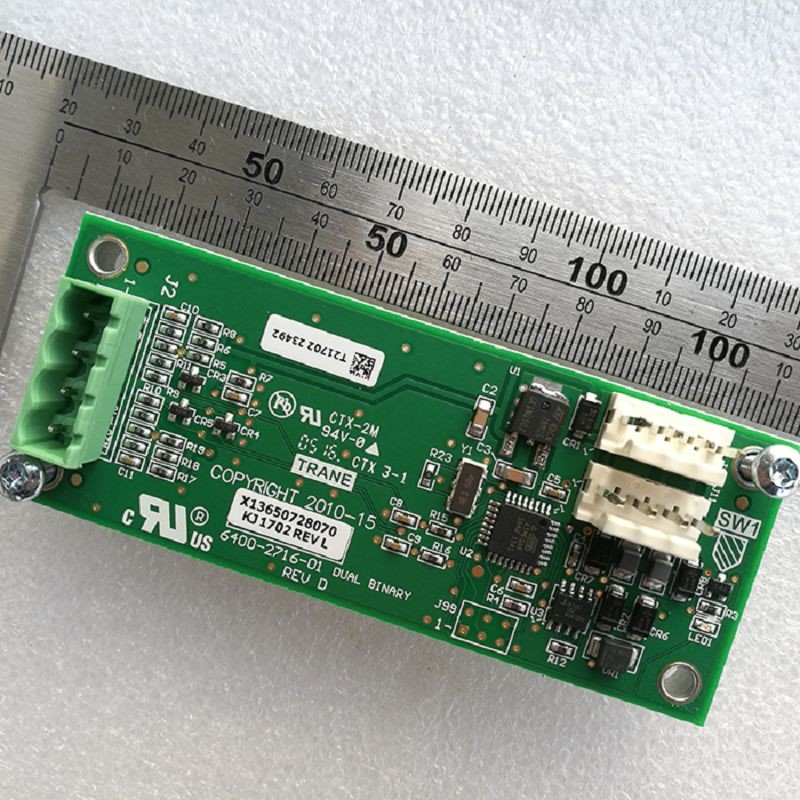
Modbus is a very common protocol in industrial automation. It's an open - source protocol that allows a control board to communicate with other devices, like sensors, meters, and actuators. It's easy to implement and can work over both serial and Ethernet connections. For example, a Trane Control Board in an HVAC system might use Modbus to communicate with temperature sensors and valve actuators.
CAN (Controller Area Network)
CAN is a protocol designed for in - vehicle networks and industrial applications. It's a reliable and robust protocol that can handle high - speed data transfer in a noisy environment. A control board in a car's engine management system or an industrial robot can use CAN to communicate with other components in the system.

How the Communication Happens in Practice
Let's say you have a control board in a smart home system. The control board needs to communicate with a temperature sensor and an air conditioner.
First, the control board sends a request to the temperature sensor using a specific communication method and protocol. The sensor receives the request, measures the temperature, and then sends the data back to the control board. The control board analyzes the data and decides if the air conditioner needs to be turned on or off. If it decides to turn on the air conditioner, it sends a command to the air conditioner's control unit using the same or a different communication method and protocol.
In an industrial setting, a control board in a manufacturing machine might communicate with multiple sensors to monitor the machine's operation. If a sensor detects an abnormal condition, like over - temperature or excessive vibration, it sends a signal to the control board. The control board then takes appropriate action, like shutting down the machine or adjusting its operating parameters.
Why Good Communication Matters
Good communication between a control board and other devices is crucial for the proper functioning of a system. If the communication is unreliable or inaccurate, it can lead to all sorts of problems. In a smart home system, inaccurate temperature data from a sensor could result in the air conditioner running too long or not enough, leading to discomfort and wasted energy. In an industrial setting, a breakdown in communication could cause a machine to malfunction, leading to production delays and potentially costly repairs.
As a control board supplier, I understand the importance of reliable communication. That's why I make sure all my control boards are designed and tested to work well with different communication methods and protocols. Whether you're working on a small - scale DIY project or a large - scale industrial system, I've got the right control board for you.
If you're interested in purchasing control boards for your project, I'd love to have a chat with you. We can discuss your specific requirements, the best communication options for your application, and how my control boards can fit into your system. Don't hesitate to reach out and let's start this exciting journey together!
References
- "Industrial Communication Technology Handbook" by Andrew C. Singer
- "Wireless Communication Systems: A Unified Approach" by Jochen Schiller
- "Modbus Protocol Specification" by Schneider Electric


